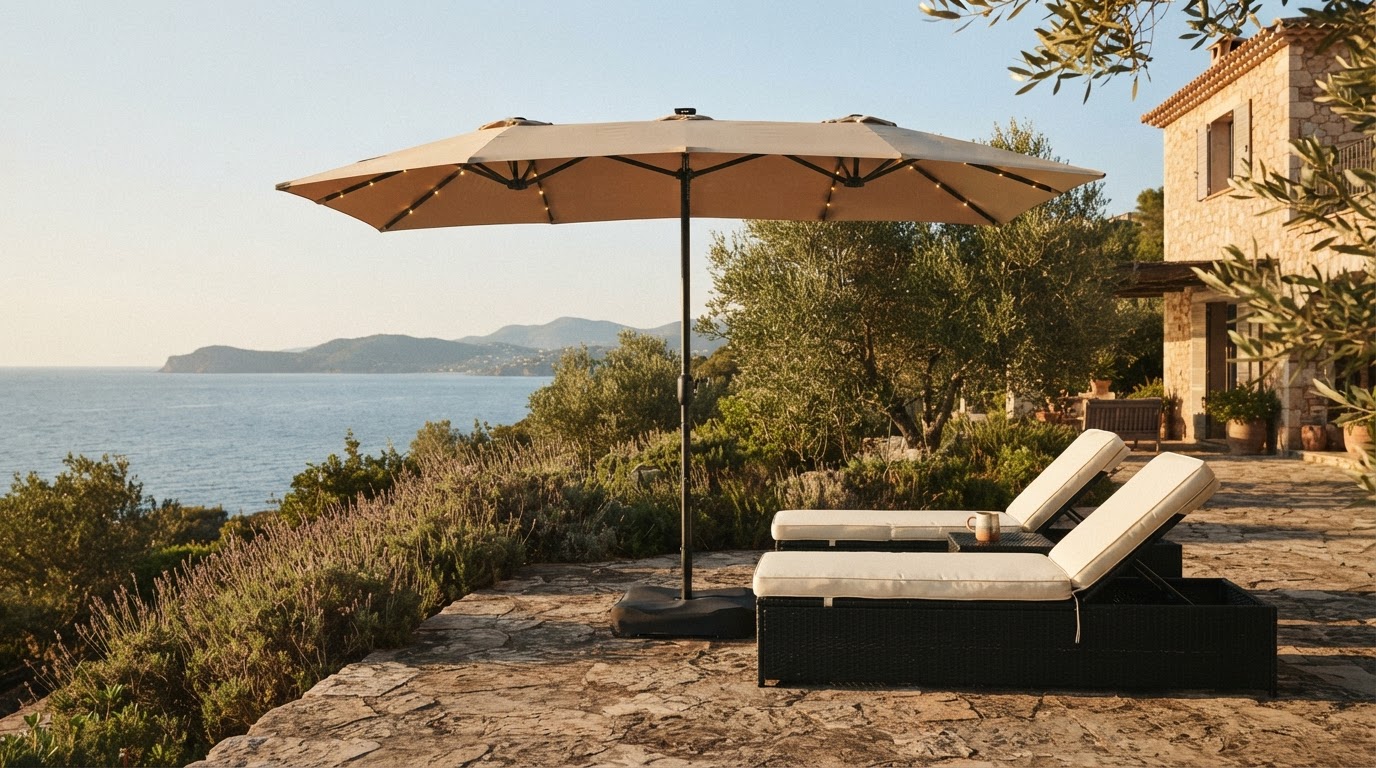
Solar Lights Umbrella Engineering for High Wind Stability
 Priya RamanSenior Analyst
September 3, 2026 — The recent surge in demand for solar-integrated outdoor furniture has shifted the focus from mere aesthetics to structural integrity, particularly for the Solar Lights Umbrella lineup. As homeowners increasingly seek multi-functional pieces, the challenge remains balancing heavy lighting components with aerodynamic stability.
Selecting a shaded solution for exposed decks requires understanding the physics of lift and drag. According to testing data from American Holtzkraft, patented commercial models are often engineered to handle wind speeds up to 74.5 mph, highlighting the significant leap between standard residential gear and high-performance structural frames. For the average consumer, navigating this space means evaluating how a Solar Lights Umbrella manages the additional weight of integrated LEDs and solar panels without compromising its center of gravity. Think of it as a matrix of frame flexibility and canopy permeability.
The Stability Selection Framework
When evaluating a Solar Lights Umbrella for wind-prone environments, two axes matter here: structural rigidity and aerodynamic venting. The first axis focuses on the skeletal system of the unit. A 9ft solar cantilever umbrella with lights requires a robust rib structure—typically aluminum or fiberglass—to prevent the frame from buckling under sudden gusts. The second axis involves the canopy’s ability to release pressure. Without proper venting, a large canopy acts as a sail, transferring all kinetic energy directly to the base.
Data from recent consumer usage patterns indicates that a patio umbrella with led lights solar powered is most effective when paired with a base weight exceeding 50 pounds for standard market styles, and significantly more for cantilevered designs. Research into the 9ft solar powered market umbrella shows that a three-tier venting system is superior to single-vent designs as it allows air to pass through multiple layers, neutralizing the lift effect. For those in coastal regions, the decision rule is simple: prioritize a heavy-duty solar umbrella for wind that utilizes a powder-coated aluminum pole and a minimum 220g polyester fabric. This combination ensures the unit remains grounded while protecting the internal wiring of the solar-powered LED system, which typically offers a runtime of 8 to 10 hours on a full charge, covering a wide diameter of illumination.
Expert tip: Always check the IP rating of your integrated lights; a waterproof solar powered garden umbrella with an IP65 rating ensures that moisture driven by high winds won't short-circuit the LED nodes or the battery housing located at the top of the pole.
Once you see it this way, the choice becomes less about the number of lights and more about the interplay between the solar panel's placement and the umbrella's vertical axis. Ensuring your 9ft solar powered market umbrella is anchored correctly is the first step toward longevity. For those in particularly exposed areas, a heavy duty solar umbrella for wind provides the reinforced joints necessary for peace of mind. Furthermore, choosing a waterproof solar powered garden umbrella ensures that the electronic components survive the horizontal rain that often accompanies high-wind events. Understanding these mechanics is essential before investing in a 9ft solar powered market umbrella for your primary outdoor dining space.
Structural integrity and light performance must coexist to provide a safe, illuminated environment. By focusing on vented canopies and reinforced poles, you ensure your investment stands firm against the elements.
Sources
- Best Sun Umbrellas for UV Protection: 9 Expert-Tested Picks (May 2026)
- Best Patio Umbrellas for High Wind Conditions - American Holtzkraft
- The Best Patio Umbrellas for Wind: What to Look For and Our Top Picks