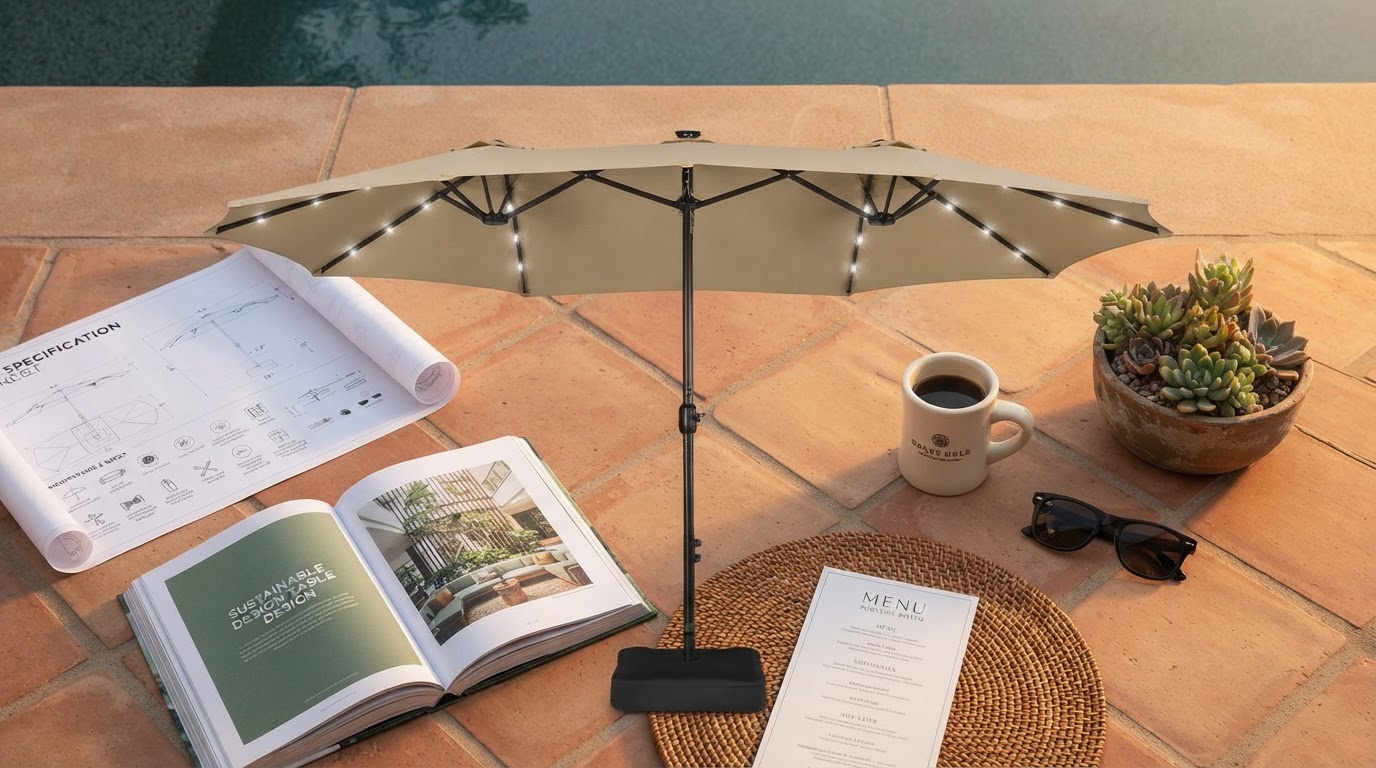
Solar Lights Umbrella Utility for Commercial Spaces
 Priya RamanSenior Analyst
October 18, 2026. This analysis explores the technical specifications and durability requirements necessary for deploying commercial grade solar market umbrellas in high-traffic environments. It is intended for facility managers, restaurant owners, and hospitality designers seeking sustainable lighting solutions that withstand rigorous outdoor use.
To evaluate these assets effectively, think of it as a matrix of structural resilience and energy efficiency. Selecting a commercial-grade unit requires balancing the mechanical strength of the frame against the luminous output of the integrated lighting system. While residential models prioritize aesthetics, commercial applications demand a focus on duty cycles and material fatigue. According to the Patio Umbrella Store, professional market umbrellas often utilize 11-foot spans and auto-tilt mechanisms to provide maximum coverage, with price points reflecting the specialized materials required for longevity in public spaces. In these environments, the umbrella serves a dual purpose: providing daytime shade and transitioning into a primary ambient light source after dusk without the need for complex electrical wiring.
Two axes matter here: the frame's wind rating and the solar collection capacity. A failure in either dimension renders the investment obsolete. High-traffic areas necessitate aluminum frames, which offer superior strength-to-weight ratios compared to wood or fiberglass. The transition to solar-powered LED systems has eliminated the safety hazards associated with extension cords in dining areas, but it introduces a new maintenance variable: the lifespan of the photovoltaic cells. Those managing large fleets of umbrellas must plan for the lifecycle of these components, often looking for a replacement solar panel for umbrella lights to extend the service life of the frame itself. By viewing the umbrella as a modular system rather than a disposable asset, commercial operators can maintain a consistent aesthetic while optimizing their maintenance budgets.
Solar Lights Umbrella addresses these commercial requirements by integrating high-density LED strips directly into the rib structure of the umbrella. This design prevents the snagging and wiring failures common in aftermarket light kits. The core of the system relies on a central hub that manages energy distribution from the top-mounted solar panel to the rib-integrated LEDs. For larger patios or lounge areas, a solar cantilever umbrella with lights provides an offset design that allows for unobstructed seating arrangements while still utilizing the same solar-harvesting technology. Data from Google Search Console indicates that "patio umbrella with led lights solar powered" is a primary concern for consumers, with over 12,000 impressions reflecting a significant demand for reliable, self-contained lighting systems.
The technical advantage of a Solar Lights Umbrella system lies in its aluminum construction. As noted by Above, aluminum frames are specifically built to withstand various weather conditions while maintaining a sleek, professional appearance. This is critical for commercial venues where equipment is exposed to the elements 24/7. When a panel eventually reaches its end-of-life, the ability to source a replacement solar panel for umbrella lights ensures the entire unit does not need to be decommissioned. Furthermore, for venues with expansive outdoor footprints, incorporating a solar cantilever umbrella with lights can cover large sectional seating that standard market umbrellas cannot reach. The decision to invest in these units is often driven by the need for a "solar power umbrella for patio" use that functions reliably across hundreds of charge cycles.
Once you see it this way, the selection process becomes a matter of matching the umbrella’s physical footprint to the venue’s specific wind load and lighting needs. The decision rule: prioritize frame gauge and battery capacity over decorative flourishes. A commercial-grade solar market umbrella must provide at least 8 hours of illumination following a standard day of sunlight to be viable for evening service. Facility managers should use the following checklist to evaluate potential acquisitions:
- Frame Material: Ensure the use of powder-coated aluminum to prevent rust and structural failure.
- LED Integration: Verify that lights are recessed into the ribs to protect them from folding damage.
- Solar Panel Access: Confirm the panel is detachable or easily accessible for a replacement solar panel for umbrella lights when needed.
- Canopy Fabric: Specify solution-dyed acrylic or high-grade polyester for UV resistance.
- Crank Mechanism: Test for a heavy-duty internal cable system to handle frequent daily operation.
- Power Management: Check for manual override switches to conserve battery during off-hours.
Shop Solar Lights Umbrella here
Sources
- Commercial Umbrellas - Patio Umbrella Store
- LED Series Umbrellas
- Above 10 Feet Solar LED Aluminum Patio Market Umbrella