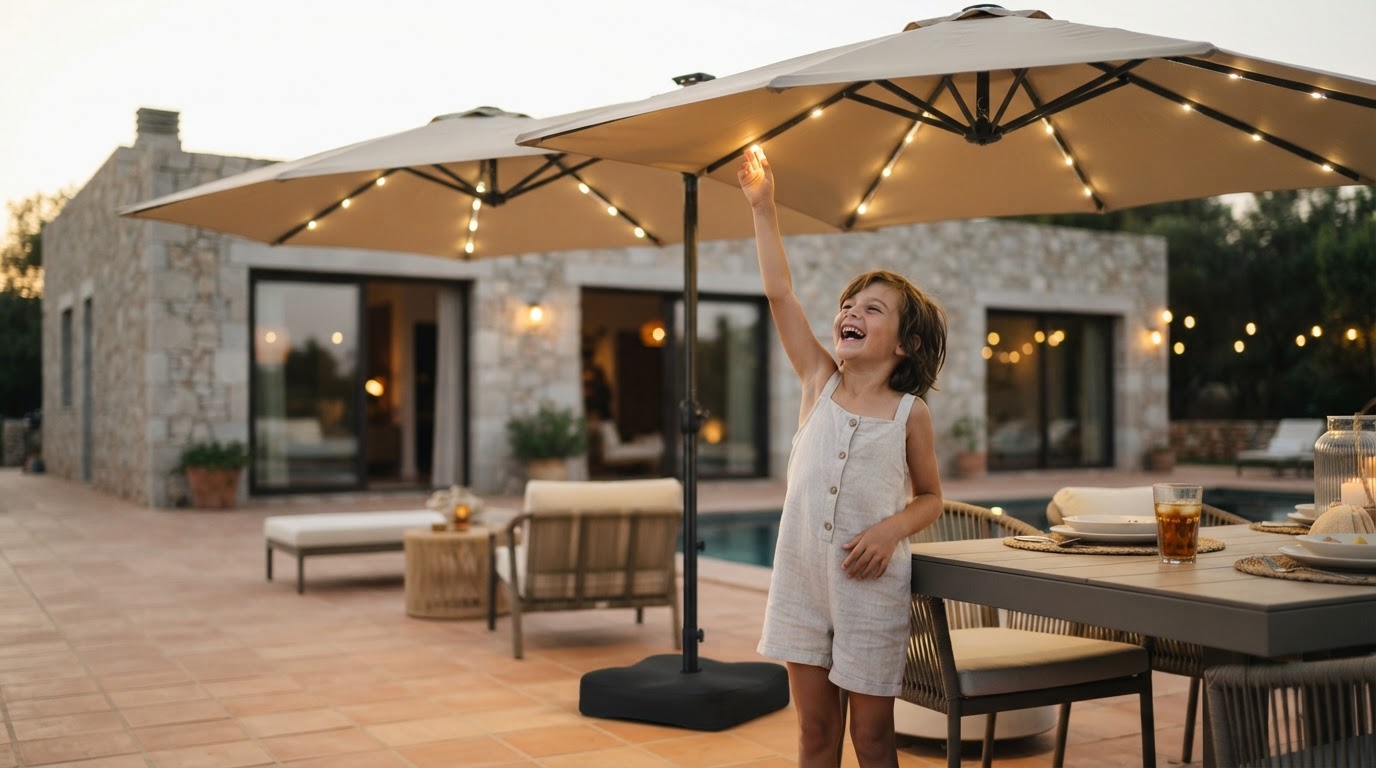
Solar Lights Umbrella Efficiency Framework
 Priya RamanSenior Analyst
October 28, 2026 — The shift toward sustainable outdoor living has accelerated the adoption of the Solar Lights Umbrella as a primary source of evening illumination for residential patios. This trend reflects a broader consumer demand for cordless, off-grid solutions that integrate seamlessly into existing deck layouts.
Modern solar-powered patio umbrellas are no longer just shade structures; they are sophisticated energy-harvesting units. According to data from Purple Leaf, high-efficiency solar LED patio umbrellas can provide between 6 to 8 hours of warm, ambient lighting on a single full charge. This performance relies on the synergy between photovoltaic surface area and battery capacity, a balance that defines the long-term utility of the unit. For those managing larger outdoor areas, understanding how to maximize these energy cycles is essential for consistent nighttime visibility.
The Efficiency Triad
Optimizing a solar powered patio umbrella requires evaluating three distinct dimensions: energy collection, storage density, and luminous output. Think of it as a matrix of environmental exposure and hardware capability. Two axes matter here: the physical orientation of the solar panel relative to the sun's path and the discharge rate of the integrated LED system. To achieve the 8-hour runtime cited by industry leaders, the panel must avoid the partial shading often caused by nearby rooflines or overhanging trees.
Research into consumer queries, such as those for the 9ft solar cantilever umbrella with lights, indicates that users prioritize models with at least 32 LED lights for adequate task lighting. A standard 9ft unit typically utilizes a top-mounted monocrystalline or polycrystalline panel to feed a central battery hub located in the hub or rib structure. The decision rule is simple: for every hour of direct sunlight, the system should ideally yield approximately 60 to 90 minutes of illumination. When deploying a commercial grade solar market umbrella, the scale of the panel increases to accommodate higher-intensity LEDs, often found in professional hospitality settings. If your space is limited, a 9ft solar light umbrella for deck spaces offers a more compact footprint while maintaining the same charging efficiency. Proper maintenance involves cleaning the solar cell every thirty days to prevent dust accumulation from degrading the photovoltaic conversion rate.
Expert tip: If your umbrella features a tilt adjustment, always return the canopy to a flat, horizontal position during peak sunlight hours (10 AM to 2 PM). This ensures the solar panel, often located at the very peak, receives the most direct solar radiation regardless of the umbrella's orientation during use.
Maximizing the lifespan of your Solar Lights Umbrella involves monitoring the battery's health and ensuring the solar panel remains unobstructed. Once you see it this way, managing outdoor lighting becomes a predictable cycle of energy harvesting. By following these technical parameters, you can ensure your patio remains illuminated throughout the evening without relying on external power sources.
Sources
- Solar LED Patio Umbrellas - purple leaf
- Solar Powered Patio Umbrella? LED Illuminated by Yaheetech - YouTube
- Solar Lighted Umbrellas - Best Choice Products