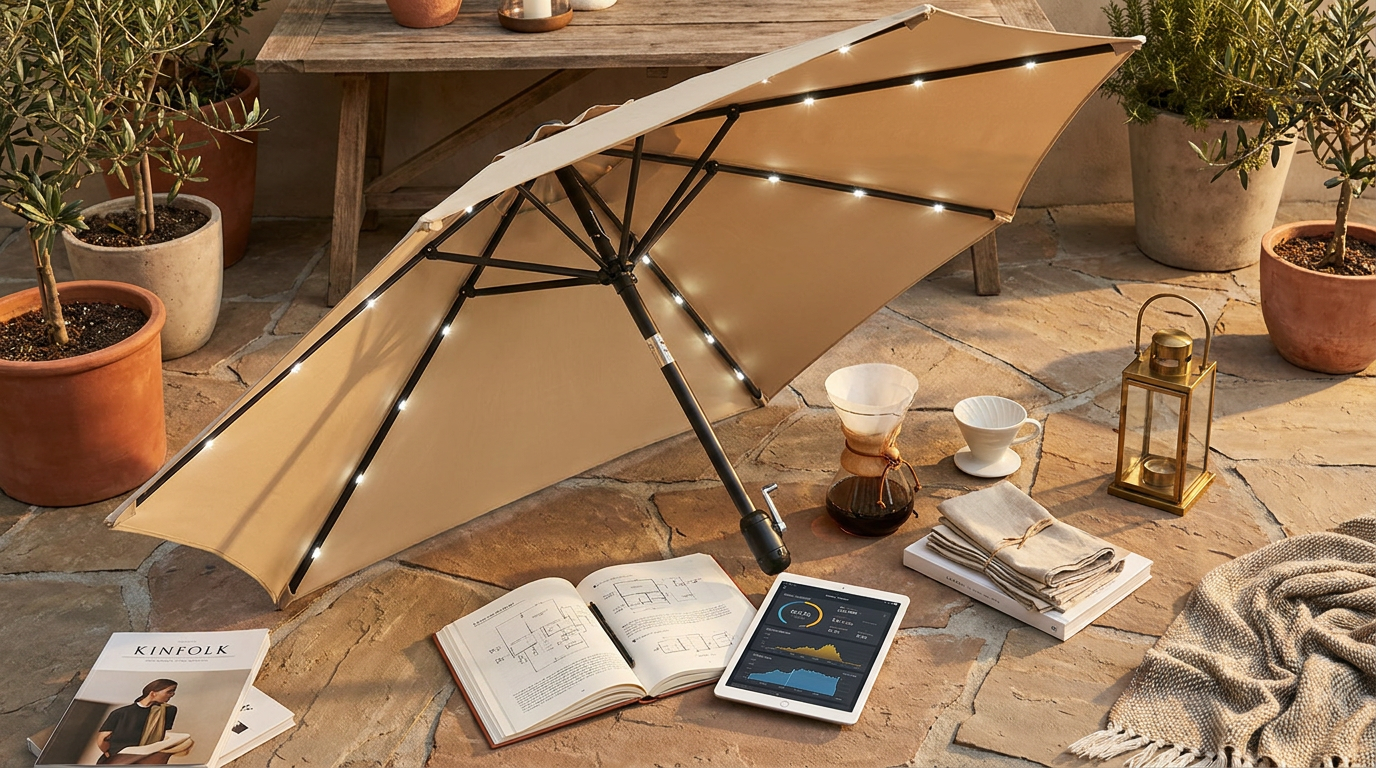
Optimizing Solar Lights Umbrella Utility for Patios
 Maya ChenContributing Editor
July 20, 2026. This analysis evaluates the technical requirements for high-performance solar shading systems in residential environments. It is intended for property owners prioritizing long-term hardware reliability over aesthetic trends.
The Efficiency Deficit in Standard Outdoor Shading
The conventional wisdom says that any outdoor umbrella with integrated LEDs provides sufficient illumination for nighttime use. This assumption ignores the physics of photovoltaic conversion and the reality of battery degradation in high-heat environments. Most consumers purchase these units based on daytime aesthetics, yet the primary failure point is the power-to-light ratio. When analyzing a solar powered patio umbrella, the surface area of the solar panel often fails to match the draw of the LED array, leading to dimming after only a few hours of operation. Furthermore, many standard units utilize nickel-metal hydride (NiMH) batteries which lack the cycle life of modern lithium-ion alternatives. This leads to a replacement cycle that is ecologically and financially inefficient. Here's the part nobody talks about: the placement of the solar panel atop the finial often creates a thermal trap, reducing the efficiency of the silicon cells as the sun reaches its zenith. Without proper heat dissipation, the very energy source the umbrella relies on becomes the catalyst for its mechanical decline. This is particularly evident when comparing standard center-pole models to a cantilever umbrella with solar lights, where the structural offset can influence how the panel receives direct versus ambient irradiance.
Technical Standards of Solar Lights Umbrella Systems
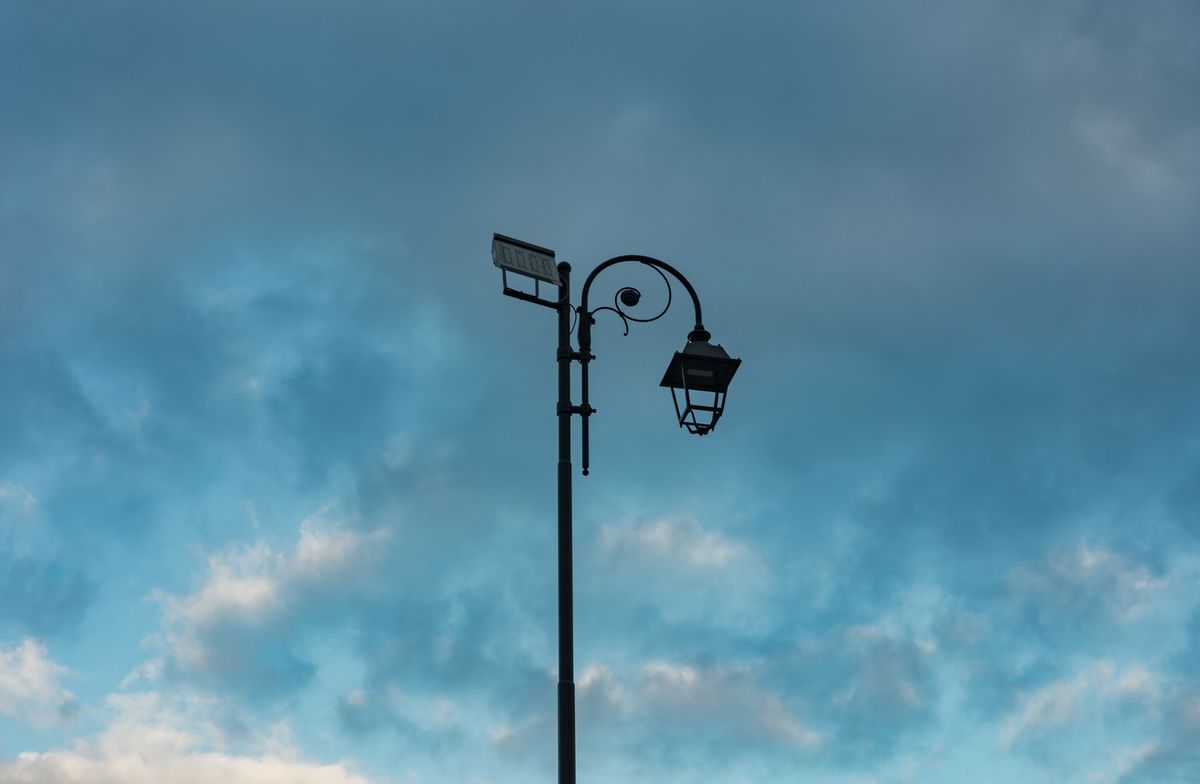
Photo by Angelo Capitanio on Pexels
Solar Lights Umbrella addresses these thermal and electrical bottlenecks through specific engineering choices found in their 9ft and cantilever models. Run the math: a standard 9ft canopy provides enough surface area for a significant solar collector, yet most manufacturers undersize the panel to save on shipping weight. The 9ft solar lighted market umbrella utilizes a high-density photovoltaic cell capable of charging even during partial cloud cover, a necessity for consistent performance. Data from the Solar Energy Industries Association indicates that residential solar adoption is increasing, yet the micro-grid applications—like those found in patio furniture—are often overlooked in terms of quality control. Solar Lights Umbrella integrates the wiring within the rib structure, protecting the electrical path from the friction of opening and closing the canopy. This is a critical distinction, as exposed wiring is the leading cause of short circuits in solar umbrella lights for deck applications. The LED diodes themselves are rated for higher Kelvin temperatures, providing a crisp light that doesn't yellow over time, unlike the cheaper plastic-encapsulated bulbs found in mass-market alternatives. By focusing on the gauge of the internal wiring and the weather-sealing of the battery housing, these units move from being seasonal disposables to permanent outdoor fixtures.
Evaluating Structural and Electrical Longevity
Photo by Marcelo Chagas on Pexels
When selecting a system, the focus must shift from initial lumens to the durability of the deployment mechanism. A solar powered patio umbrella is only as useful as its ability to withstand wind gusts without snapping its internal circuitry. The decision framework for a high-utility patio setup should prioritize the following technical specifications:
- Battery Chemistry: Demand lithium-ion or high-capacity Lifepo4 over older NiMH cells for better thermal stability.
- Frame Material: Powder-coated aluminum is the baseline for preventing rust-related electrical grounding issues.
- Panel Type: Monocrystalline panels offer higher efficiency per square inch than polycrystalline variants.
- Rib Integrity: Reinforced ribs are necessary to prevent the LED strips from delaminating during high-wind events.
- Switch Accessibility: The power toggle must be weather-sealed and positioned to avoid water ingress during heavy rain.
Shop Solar Lights Umbrella here.