Solar Lights Umbrella Engineering for High Wind Areas
 Sam VasquezBuying Guide Lead
November 1, 2026. This guide examines the structural requirements for outdoor shade structures in high-velocity wind zones. It is written for homeowners and commercial operators who need reliable illumination without sacrificing structural integrity during sudden gusts.
The Physics of Wind Resistance in Solar Lighting
When you place a large canopy in an open area, you are essentially installing a sail. In my experience, most standard patio umbrellas fail not because of the fabric quality, but because the frame cannot dissipate the kinetic energy of a gust. According to Forbes Vetted in their analysis of the Best Patio Umbrellas For Wind 2026, the most effective designs utilize vented canopies and sturdy frames from brands like Tuuci or Frontgate to prevent the unit from becoming airborne. For solar-integrated models, this challenge is doubled; the frame must be rigid enough to withstand the wind while protecting the internal wiring that connects the solar panel to the LED ribs.
I have seen too many budget models snap at the tilt joint because they use thin-walled aluminum. If you live in a coastal area or an elevated plains region, a standard [9ft solar light umbrella for deck](/blog/9ft-solar-light-umbrella-for-deck) might struggle if it lacks a reinforced central pole. High-wind stability often comes down to the ribs. While traditional steel ribs are stiff, they are prone to permanent bending. Modern heavy-duty options often look toward flexible materials. As noted by PatioShoppers.com, some wind resistant umbrellas now feature fiberglass rib arms that absorb wind forces by flexing rather than snapping. When you add solar components into this mix, that flexibility must be balanced so the wiring doesn't fatigue over time.
How Solar Lights Umbrella Balances Weight and Power
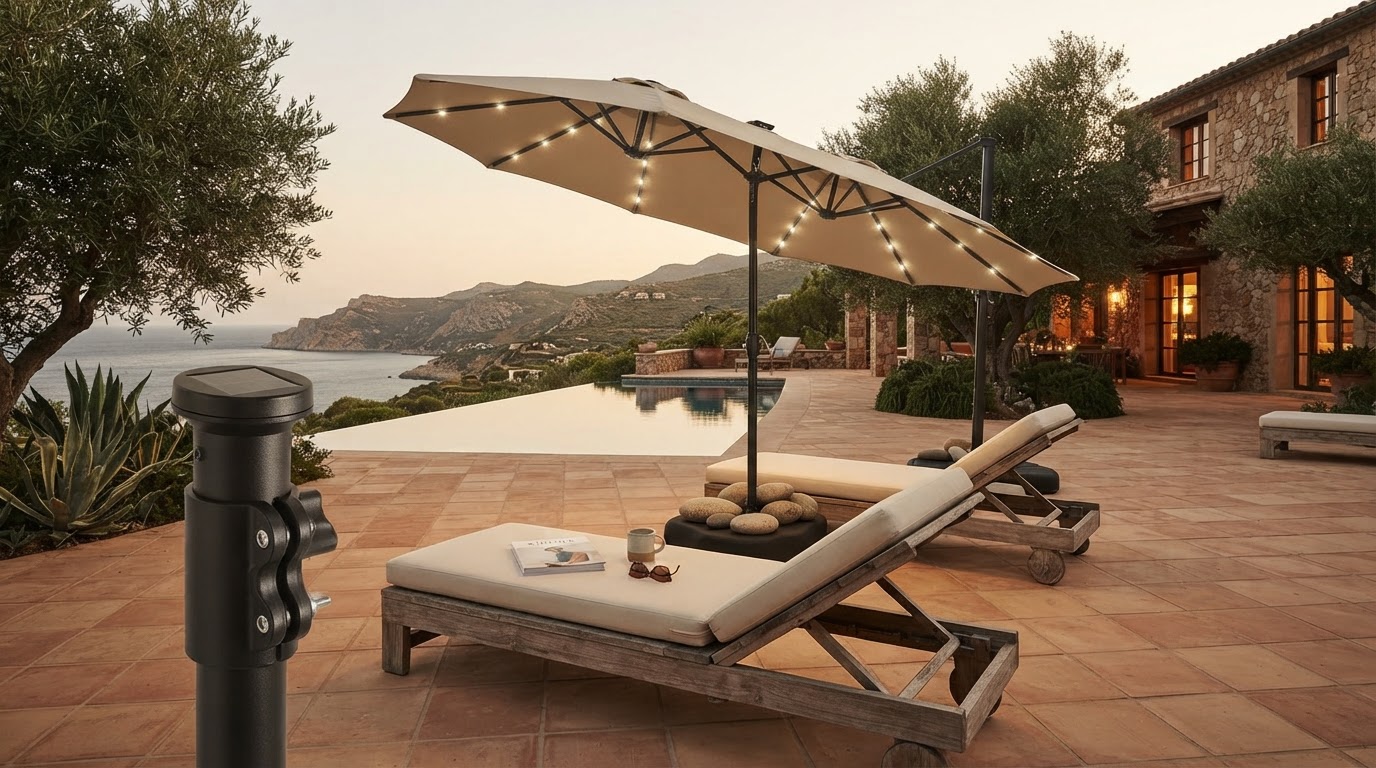
At Solar Lights Umbrella, the design philosophy centers on the 9ft solar cantilever umbrella with lights. This specific configuration is often requested by users who find that center-post umbrellas interfere with their seating arrangements. However, a cantilever design inherently creates more leverage for the wind to act upon. To counter this, our heavy-duty iterations focus on a thickened mast and a dedicated housing for the solar array that sits flush with the top cap. This reduces the wind profile of the solar panel itself, which is a common failure point on cheaper units where the panel is simply clipped onto the fabric.
Between these two, I'd go with a market-style umbrella for maximum wind resistance, but the cantilever is the winner for versatility. We see significant interest in the [commercial grade solar market umbrella](/blog/commercial-grade-solar-market-umbrella) for spaces that experience constant daily drafts, such as rooftop bistros or poolside decks. The integration of LED lights directly into the ribs means there are no hanging wires to catch the wind. This is a critical distinction; external string lights act like small parachutes in a storm, whereas integrated LEDs maintain the aerodynamic profile of the umbrella ribs. If you are setting up a solar powered table umbrella for evening dinner, the internal wiring ensures that even if the canopy ripples in a breeze, your lighting remains consistent and protected.
Skip this if you plan on taking your umbrella down every time the clouds turn grey. These heavy-duty builds are meant for people who want a semi-permanent fixture. If you're on a budget, you might be tempted by a $50 hardware store special, but you will likely replace it after the first thunderstorm. Here's what I'd actually buy: a model with a dual-vent canopy. A single vent allows some air to escape, but a dual-vent system significantly reduces the 'lift' created by underneath gusts. This structural choice, combined with a 9ft span, provides the ideal ratio of shade coverage to wind stability.
Decision Framework for High-Wind Solar Shade
Selecting a heavy-duty solar umbrella requires looking past the aesthetic and into the hardware specs. You need to ensure the base weight is proportional to the canopy size. A 9ft umbrella in a 15mph wind can generate hundreds of pounds of force. If you are using a 9ft solar light umbrella for deck applications, ensure the base is either bolted down or weighted with at least 80 pounds of sand or water.
When evaluating your options, use this checklist to ensure the model can handle the elements:
- Rib Material: Look for fiberglass or reinforced aluminum rather than thin-gauge steel.
- Solar Panel Integration: Ensure the panel is recessed or securely bolted to the hub, not just resting on the fabric.
- Canopy Venting: Prioritize dual-vent or 'wind-smart' designs that allow air to pass through the top.
- Lighting Protection: Confirm the LEDs are embedded in the ribs to prevent wire snagging during canopy movement.
- Base Compatibility: Verify the pole diameter matches a heavy-duty base (usually 1.5 to 2 inches).
Investing in a wind-resistant solar umbrella means you don't have to scramble to close your patio gear the moment the wind picks up. By focusing on frame flexibility and integrated electronics, you get a light source that is as durable as it is functional.
Shop Solar Lights Umbrella here