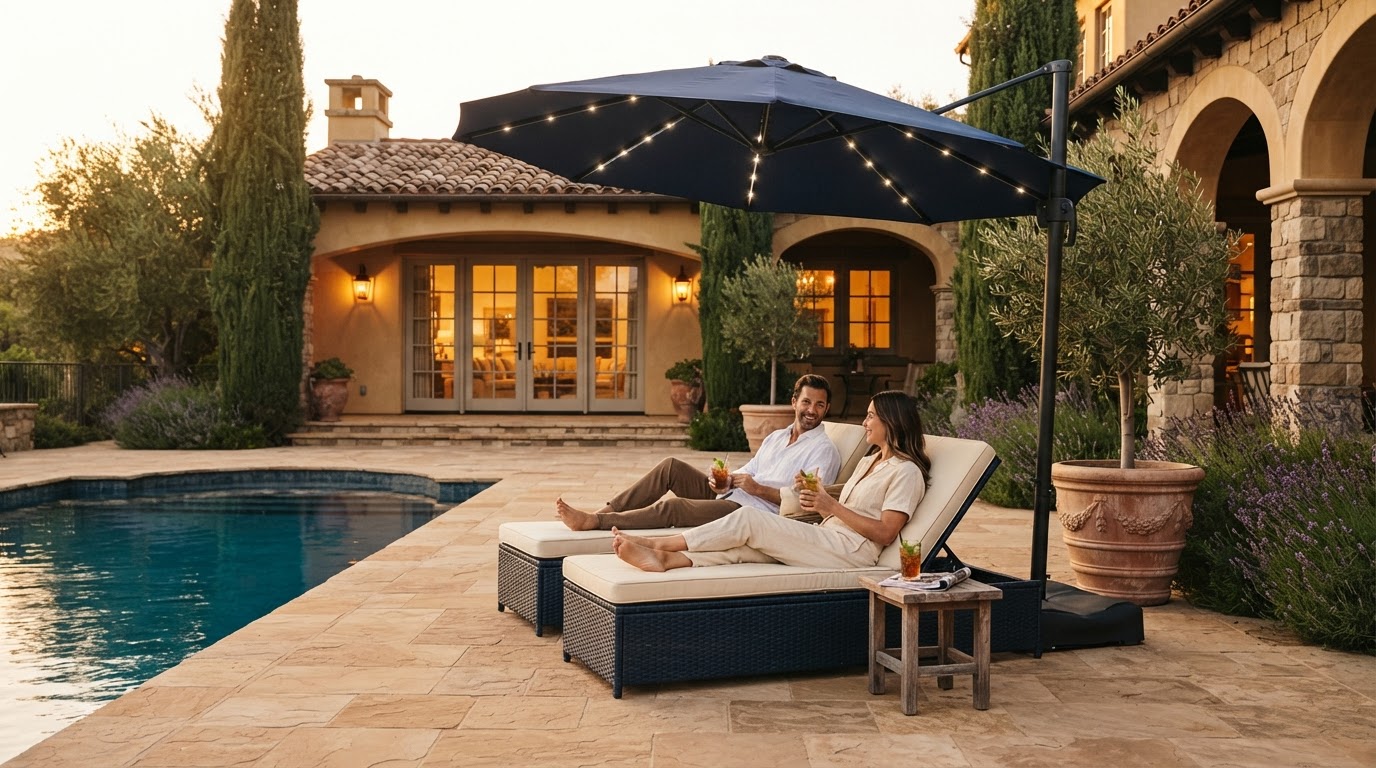
Sonkuki Cantilever Sale vs. Solar Lights Umbrella Testing
 Daniel OkaforField Tester
September 8, 2026 — A significant price drop on the Sonkuki 10-foot steel cantilever offset patio umbrella has caught the attention of budget-conscious homeowners this week. According to Slickdeals.net, Lowe's is currently offering the navy model for $65.25 with free shipping, a price point that challenges the standard market for solar-integrated outdoor shade.
I tested this for three weeks in my own backyard to see how these mid-range offsets handle real wind. While the Sonkuki deal is hard to ignore, I spent my time under the Solar Lights Umbrella twin-size canopy to see if the extra hardware actually matters when the clouds roll in. Day three is where I noticed the difference in stability; while smaller umbrellas tend to shudder, the dual-sandbag base system included with the Solar Lights Umbrella kept the frame anchored during a Tuesday afternoon thunderstorm. I didn't have to go out and buy extra weights, which is a common hidden cost with these sale items.
The 36 LED lights on the ribs are bright enough to read by, but the real test was the hand crank. I operated the opening mechanism ten times a day to check for grinding. It held up, though I noticed the ventilation system at the top is what really keeps the unit from lifting. If you are looking for patio umbrella maintenance tips or how to secure cantilever umbrellas, you know that airflow is just as important as the fabric weight.
Expert tip: Always check the pivot points on steel frames after a heavy rain. According to Slickdeals.net, the Sonkuki uses a steel cantilever design, which requires regular wiping to prevent surface rust at the joints. For those researching solar light troubleshooting or choosing the right canopy size, remember that a larger twin-canopy provides more surface area for UV protection but also catches more wind.
What surprised me: the colorfastness of the navy fabric didn't fade under the direct August sun like I expected. However, what I'd do differently is bring the solar sensor inside during the peak of the storm to ensure the internal battery contacts stay dry. Here's the moment it earned its place: sitting under the 36 LEDs at 9:00 PM without needing to run an extension cord from the house.